Aerial footage has moved from novelty to necessity. A residential development without a drone flyover feels incomplete; an industrial facility that cannot show its scale from above is leaving a persuasive argument on the table. In Portugal, demand for licensed drone operators has grown sharply since 2021, driven by a buoyant real estate market, expanding logistics infrastructure, and brands that increasingly want cinematic production values without blockbuster budgets.
The catch? Drone operations in Portugal sit inside a European regulatory framework that is more detailed than most clients expect. Understanding the rules before you brief an operator saves time, prevents costly surprises, and ensures the footage you commission is actually usable, commercially and legally.
How drone regulation works in Portugal
Portugal follows the EU UAS (Unmanned Aircraft Systems) regulation that came into force across all member states in 2021. The national authority is ANAC (Autoridade Nacional de Aviação Civil), which enforces the European framework locally and issues operator certificates.
Under this framework, commercial drone operations fall into three broad categories:
- Open category — lower-risk flights, with weight and altitude limits, no authorisation needed but operator registration required.
- Specific category — higher-risk operations (urban environments, beyond visual line of sight, near aerodromes) requiring a specific authorisation or a declaration under a Standard Scenario (STS).
- Certified category — the most complex operations, analogous to manned aviation.
What the A2 certificate actually means
You will often see operators advertise an A2 CofC (Certificate of Competency). This licence allows flight closer to uninvolved people under the Open category, but for Specific-category operations the operator also needs a valid STS declaration or an individual Specific Operations Risk Assessment (SORA) approved by ANAC.
When evaluating any drone operator in Portugal, ask for:
1. Proof of ANAC operator registration number
2. Their A2 CofC or higher competency certificate
3. Third-party liability insurance (minimum €750,000, often higher for urban work)
4. Evidence of prior authorisation or STS coverage for your specific location
A credible operator will hand over this documentation without hesitation. If there is any reluctance, walk away.
Real estate drone filming: what projects actually look like
Real estate remains the single largest commercial use case for drone filming in Portugal. The market spans holiday villas in the Algarve, urban apartment developments in Porto and Lisbon, logistics warehouses near major motorways, and heritage quintas being converted into boutique hotels.
What a professional real estate drone shoot typically includes:
- Exterior flyovers establishing the property's position in the landscape or neighbourhood
- Reveal shots — the drone rises or orbits to expose the façade dramatically
- Context shots showing proximity to the sea, river, city centre, or transport links
- Top-down mapping-style shots for large plots, developments, or land sales
- Transition shots connecting aerial footage to ground-level photography or video
Indicative pricing for real estate drone work in Portugal
Pricing varies significantly depending on location complexity, airspace authorisation requirements, and post-production scope. As a general guide:
- Single residential property, rural or suburban, no restricted airspace: €350–€600 for a half-day shoot with basic editing
- Urban apartment building or development, restricted airspace, full edit: €700–€1,200
- Large development or estate, multiple flyovers, colour-graded video and stills package: €1,500–€2,500+
Industrial drone filming: a different brief entirely
Industrial clients — manufacturers, logistics operators, energy companies, port authorities — come to drone filming with a different set of objectives. Accuracy, completeness, and safety compliance matter more than cinematic flair, though the two are not mutually exclusive.
Common industrial drone applications include:
- Facility overviews for institutional presentations, investor decks, or annual reports
- Progress documentation for construction or infrastructure projects
- Thermal and multispectral inspection (requires specialist sensor payloads)
- Safety and access audits over areas that are hazardous or impractical to photograph from the ground
- Brand films showcasing manufacturing scale or supply-chain infrastructure
Our team has completed industrial aerial projects across the Aveiro district and the Porto metropolitan area, and the pre-flight planning phase consistently takes longer than the shoot itself. That is normal, and any operator who skips it is cutting a corner you will eventually pay for.
Indicative pricing for industrial drone work
- Single-facility overview, half day, basic edit: €600–€900
- Multi-location industrial documentation, full day: €1,200–€2,000
- Complex site with restricted airspace, specialised authorisation, full post-production: €2,500–€4,500+
Choosing the right drone operator in Portugal
Beyond certification, a few practical questions separate operators who will deliver from those who will merely fly:
Do they manage airspace authorisation themselves? Many locations in Portugal require digital authorisation through the ANAC SES Portugal portal or coordination with ANA Aeroportos. An operator who passes this task to you is not a full-service partner.
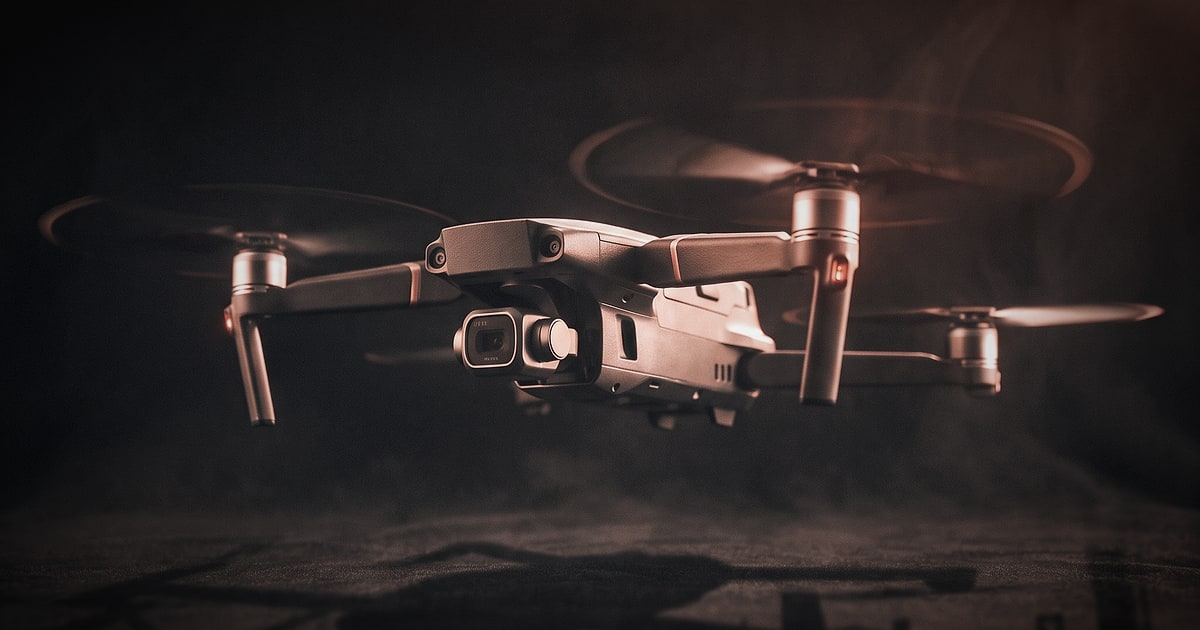
What drone platform do they use? For real estate and industrial work, the DJI Inspire or Matrice series (or equivalent professional platforms) deliver the sensor size and stability that makes footage genuinely usable in post-production. Consumer drones produce consumer results.
Who edits the footage? Aerial footage is raw material. The value is unlocked in post-production: colour grading, stabilisation, music, sound design, and integration with ground-level footage. An operator who only delivers raw files is delivering half a service.
Have they worked in your specific context? A team comfortable with coastal real estate shoots may not have the industrial site experience to navigate a port facility safely. Ask for examples.
Our drone services cover the full workflow: regulatory compliance, airspace management, the shoot itself, and post-production, so clients receive finished assets rather than raw footage that requires a second contractor.
Integrating drone footage with ground-level production
The most effective real estate and industrial videos rarely rely on aerial footage alone. Drone shots establish context and scale; ground-level footage delivers detail, atmosphere, and human story. The transition between the two, when handled well in the edit, feels seamless and creates a genuinely cinematic result.
A coherent production approach means:
- Shooting aerial and ground content on the same day, with matched colour temperatures and consistent look
- Planning the drone reveals to connect logically with interior or close-up sequences
- Grading aerial and ground footage together so the final cut feels unified
What to prepare before briefing a drone operator
Coming to the conversation prepared saves time on both sides. Before your first call with an operator, have answers ready for:
- Exact location(s): address or GPS coordinates, not just the municipality
- Shoot objectives: is this for marketing, documentation, inspection, or investor communication?
- Deliverable format: social media clips (vertical or horizontal), broadcast-quality video, still photography, or all three
- Timeline: ANAC authorisations can take several working days; urban or restricted-airspace locations may require longer
- Usage rights: will footage appear in paid advertising? This affects insurance requirements
The regulatory landscape is still evolving
The EU UAS framework introduced in 2021 brought welcome clarity, but it continues to develop. The European Union Aviation Safety Agency (EASA) regularly updates its guidance, and ANAC issues national amendments in response. Operators who keep their certification current and monitor regulatory changes are worth the premium they may charge over uncertified alternatives.
Flying without authorisation in a zone that requires it is not just a fine risk for the operator — it can invalidate the footage legally, expose the commissioning company to liability, and, in serious cases, result in civil prosecution. In Portugal, ANAC enforcement has become meaningfully more active since 2022.
The aerial production landscape in Portugal is maturing quickly. Clients are becoming more sophisticated, operators are investing in better platforms and credentials, and the footage being produced, particularly for premium real estate and industrial brands, is increasingly indistinguishable from what you would see in international commercial campaigns. That is a high bar, and it is achievable — with the right team, the right prep, and a clear brief.