
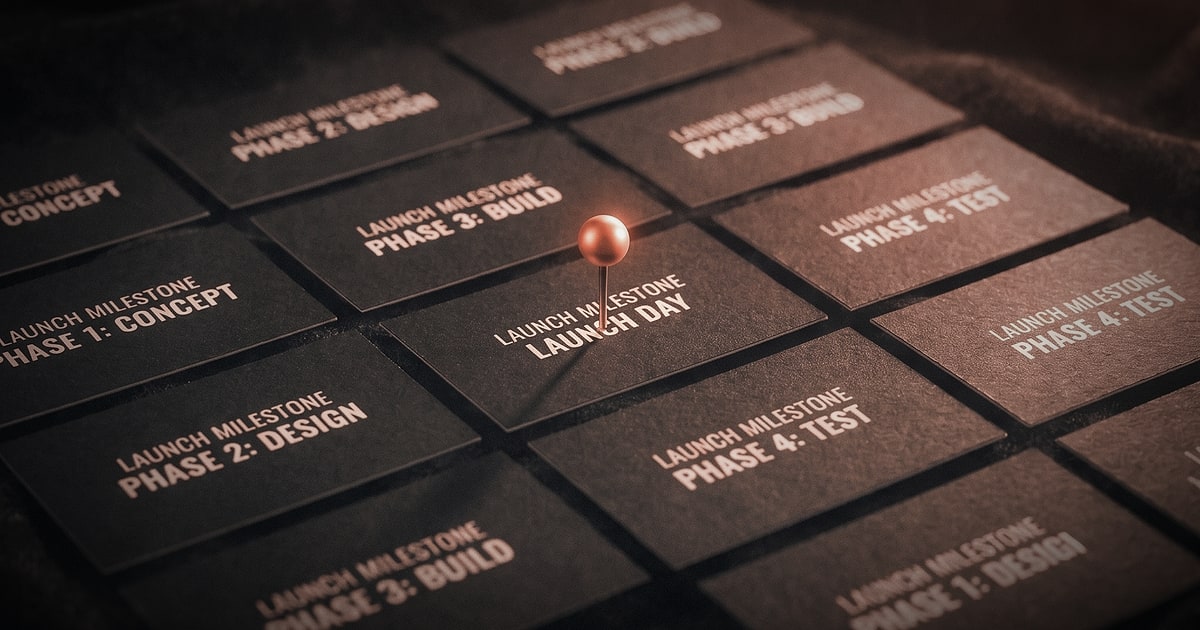
Launching a product without a content strategy is like filming a blockbuster without a script. You might have the best actors, the finest equipment, and a genuinely brilliant story — but without a clear narrative arc, the audience gets lost before the third act. In today's saturated market, content is not a support function for your launch. It is the launch.
Whether you're introducing a SaaS tool, a physical product, or a new service line, the content you create before, during, and after your go-live date determines how your audience perceives, trusts, and ultimately buys into what you're offering. This framework breaks the process into five clear phases, each with specific deliverables, channel considerations, and the kind of creative thinking that separates memorable launches from forgettable ones.
Phase 1: Discovery and Positioning — Know What You're Really Selling
Before a single word is written or a frame is shot, you need absolute clarity on your product's position in the market. This isn't just a marketing task — it's a strategic foundation.
Ask yourself these defining questions:
- What problem does this product solve, and for whom exactly?
- What already exists in the market, and how are you meaningfully different?
- What is the one emotion you want customers to feel when they first encounter this product?
- What does success look like 30, 60, and 90 days post-launch?
At this stage, build a content positioning document — a single source of truth that includes your tone of voice, core messages, persona descriptions, and the emotional journey you want to take your audience on. Every content creator, whether in-house or external, should work from this document.
Phase 2: Pre-Launch — Build Anticipation Before the Curtain Rises
The pre-launch phase typically spans four to eight weeks before your go-live date, and it is, arguably, the most creatively exciting window of the entire campaign. This is where you build desire without giving everything away.
Teaser Content
Start with intrigue. A well-crafted teaser — whether a 15-second video clip, a blurred product image, or a cryptic tagline on social media — primes your audience's curiosity. The goal is not to inform, but to make people lean in. Think of it as the trailer before the film: it reveals just enough to generate conversation.
Waitlist and Early Access Campaigns
Give your most engaged audience a reason to raise their hand early. Early-access campaigns do two things simultaneously: they validate demand before launch day, and they create a pool of highly engaged early adopters who become your first wave of authentic social proof.
Email sequences during this phase should feel personal and exclusive — not like broadcast newsletters, but like dispatches from behind the scenes.
Behind-the-Scenes Content
Modern audiences are deeply curious about process. Short documentary-style videos showing the product being made, the team debating design decisions, or even the bloopers from a photoshoot humanise your brand in ways that polished advertising rarely can. This is content that builds trust before trust is even asked for.
From our experience producing brand films and editorial photography for product launches across Europe, the behind-the-scenes assets often generate more organic engagement than the hero campaign itself — and they cost a fraction of the budget to produce.
Phase 3: Launch Day — The Hero Moment
Launch day content needs to do one thing above all else: convert. The discovery phase has been done; the anticipation has been built. Now it's time to close.
The Hero Asset
Every launch deserves a hero asset — the centrepiece piece of content that lives on your homepage, leads your paid campaigns, and anchors your social channels. For most brands today, this is a short-form video between 60 and 90 seconds. It should be cinematic in quality, precise in message, and emotionally resonant.
The best hero videos follow a simple arc: 1. Open on the problem — make the viewer feel it 2. Introduce the product as the answer, not the subject 3. Show real benefit through demonstration or human reaction 4. Close with a clear, confident call to action
Channel-Specific Adaptations
Your hero asset should not be copy-pasted across every channel. A 90-second film becomes a 15-second Instagram Reel, a static carousel for LinkedIn, a banner for Google Display, and a GIF for email. Each platform has its own grammar, and respecting that grammar is the difference between content that performs and content that blends into the noise.
PR and Earned Media
If you've built a pre-launch waitlist and seeded your story with relevant journalists or industry creators in the weeks prior, launch day is when that investment pays off. Coordinate your owned content drops with any anticipated press coverage to create a sense of momentum across multiple touchpoints simultaneously.
Phase 4: Post-Launch — Sustain the Momentum
Most brands pour 80% of their content energy into launch day and then go quiet. This is a critical mistake. The majority of your conversions will not happen on day one — they happen in the weeks that follow, as people research, compare, and build confidence in their decision.
Social Proof Content
User testimonials, review screenshots, unboxing videos, and case study interviews should begin appearing in your content calendar within the first two weeks post-launch. This content is not glamorous, but it is extraordinarily effective. A single honest customer story often outperforms a polished brand video in driving late-stage conversions.
Educational and SEO-Driven Content
This is where your blog, YouTube channel, and LinkedIn presence become long-term assets. Articles that answer specific questions — "how to use [product] for [specific use case]" — capture organic search traffic for months and years after your launch date. Think of this content as a slow-burn investment with compounding returns.
We always recommend building at least six to eight educational content pieces before launch day, so they can be indexed and begin ranking before the campaign peaks.
Retargeting Campaigns
Anyone who visited your launch page but didn't convert is a warm lead. Retargeting ads — using video clips, testimonial carousels, or limited-time offers — keep your product front of mind during the consideration phase. The creative for retargeting should feel different from your awareness content: more direct, more specific, and more urgent.
Phase 5: Review and Iteration — The Edit Suite Mindset
The best filmmakers will tell you that a film is made three times: once in the writing, once in the shooting, and once in the editing. Content strategy works the same way. Your post-launch review is your edit suite — the place where you make sense of what you captured and decide what serves the story best.
Analyse your data across four dimensions:
- Reach: How many people did your content actually reach, and on which channels?
- Engagement: What resonated? What was skipped, ignored, or actively disliked?
- Conversion: Which specific content pieces drove the most measurable action?
- Sentiment: What are people actually saying about the product in comments, reviews, and conversations?
Bringing It All Together: The Content Launch Stack
A complete product launch content strategy typically includes the following asset types across five phases:
- Pre-launch: teaser videos, behind-the-scenes clips, waitlist landing page, email sequences, influencer seed kits
- Launch day: hero film, platform-adapted cuts, press pack, social copy, paid ad creatives
- Post-launch: testimonial videos, case study articles, SEO blog content, retargeting creatives, newsletter series
Final Frame
A product launch is a story, and like every great story, it needs structure, tension, resolution, and a reason for the audience to care. The framework above gives you the scaffolding — but the magic lives in the creative execution.
At TNG, we work alongside brands at every stage of this process, from the early positioning conversations through to the final colour grade on the hero film. Whether you're launching in Porto, Paris, or across the European market, the principles remain the same: start with strategy, build with intention, and never underestimate the power of exceptional content to turn a product into a movement.
The camera is ready. Is your story?