# Creative Direction 101: From Concept to Final Cut
There is a moment in every production — somewhere between the first brief and the final render — where a project either finds its soul or loses it entirely. That moment belongs to creative direction. It is the invisible architecture beneath every compelling brand film, every arresting photograph, every video campaign that makes you feel something before you've consciously registered why.
Creative direction is not a single job title. It is a discipline, a process, and honestly, a way of thinking. Whether you are a brand manager commissioning your first corporate video, a marketing director building a content strategy, or a founder trying to articulate what your company actually stands for — understanding how creative direction works will transform how you commission, brief, and evaluate creative work.
This is your practical primer.
What Creative Direction Actually Means
Let's clear up a common misconception: creative direction is not the same as having good taste. Taste is a starting point. Creative direction is the ability to translate a business objective into a visual and emotional language — and then hold that language consistent across every frame, every cut, every colour grade.
A creative director asks: What should this piece of content make the audience feel? What do we need them to do, think, or believe afterwards? And what is the most powerful, unexpected, or resonant way to get there?
In practice, this means making hundreds of small decisions — the tone of a voiceover, the mood of a location, the pace of an edit, the choice between a wide establishing shot and a tight close-up — each of which either reinforces or undermines the central idea.
Done well, the audience never notices any of it. They just feel it.
Stage 1: The Brief — Where Everything Begins (and Often Goes Wrong)
The quality of your creative output is almost entirely determined before a single camera is switched on. It is determined in the brief.
A strong creative brief answers six questions:
- Who are we talking to? Not just demographics, but psychographics. What does this person fear, aspire to, believe?
- What do we want them to feel? Emotion drives action. Define the emotional destination before anything else.
- What is the single most important thing to communicate? One idea. Not three. One.
- What are the constraints? Budget, timeline, platform, brand guidelines — these are not the enemy of creativity, they are the frame.
- What does success look like? Define metrics, even loosely. Views, conversions, brand recall, internal alignment — know what you're aiming at.
- What are we definitely not doing? Knowing the boundaries saves enormous time during production.
Stage 2: Concept Development — Finding the Idea
With a solid brief in hand, the creative process moves into ideation. This is where creative direction earns its keep.
Concept development is not brainstorming without boundaries. It is disciplined imagination — the search for an idea that is simultaneously true to the brand, relevant to the audience, and executable within the constraints.
The best concepts share a few qualities:
- They are simple enough to explain in one sentence
- They create a clear visual world — you can immediately picture what it looks like
- They have emotional coherence — every creative decision can be measured against the central idea
- They are differentiated — they could not belong to a competitor
One useful framework: think of your concept as the answer to the question, "If this piece of content were a person walking into a room, how would it move?" Confident? Playful? Quietly authoritative? Urgent? That character informs everything.
Stage 3: Pre-Production — The Invisible Work That Makes Everything Else Possible
Pre-production is where the concept becomes a plan. And it is, without question, the most undervalued phase of any production.
Great pre-production covers:
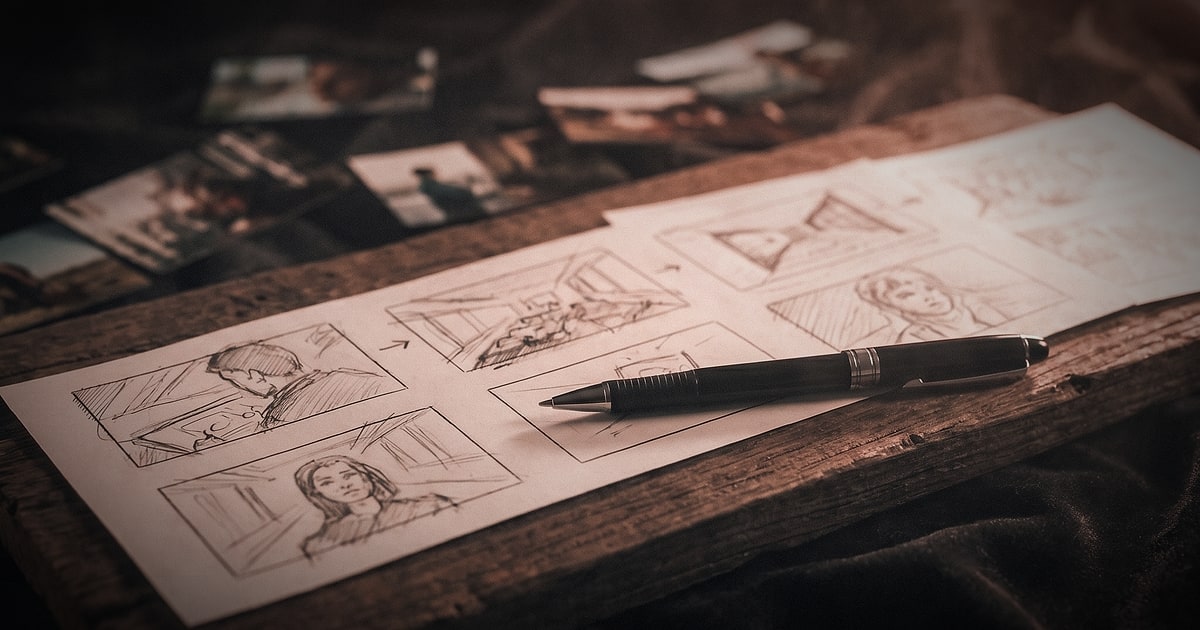
- Shot lists and storyboards: A visual plan of every scene, angle, and transition. Not just for the director — for the entire team.
- Location scouting: The right location is not just a backdrop, it is a storytelling tool. Light, texture, scale, and atmosphere all carry meaning.
- Casting and talent direction: Whether you are casting professional actors, real employees, or finding the right on-camera spokesperson, casting is a creative decision, not a logistical one.
- Scheduling and logistics: Great ideas die in poor logistics. Time on location is expensive. Every minute counts.
- Technical preparation: Camera packages, lighting rigs, drone permits, audio setups — the technical choices must serve the creative vision, not limit it.
Stage 4: Production — Holding the Vision Under Pressure
The shoot day (or days) is where theory meets reality. Locations change. Weather turns. Talent gets nervous. Props go missing. The creative director's job on set is to hold the vision firmly while remaining genuinely flexible about how to get there.
This requires two apparently contradictory skills: unwavering clarity about the goal and real-time creative problem-solving.
A few principles that guide strong on-set creative direction:
- Protect the hero shot: Know which three to five shots are non-negotiable. Everything else can flex.
- Communicate the feeling, not just the instruction: Telling a subject to "look more confident" is less useful than saying "imagine you're explaining this to a close friend who you know is going to love it."
- Review in real time: Do not wait until the edit suite to discover a problem. Check your frame, check your focus, check the performance.
- Leave room for happy accidents: Some of the best creative moments are unscripted. Build in space to explore.
Stage 5: Post-Production — Where the Story Is Told (Again)
There is a saying in film: you make the movie three times — once when you write it, once when you shoot it, and once when you edit it. Post-production is where the raw material of a shoot is shaped into something that actually works.
This phase encompasses:
- Editing: The rhythm and pacing of a cut communicate emotion as powerfully as any image. A fast cut creates energy and urgency; a long, slow take creates weight and intimacy.
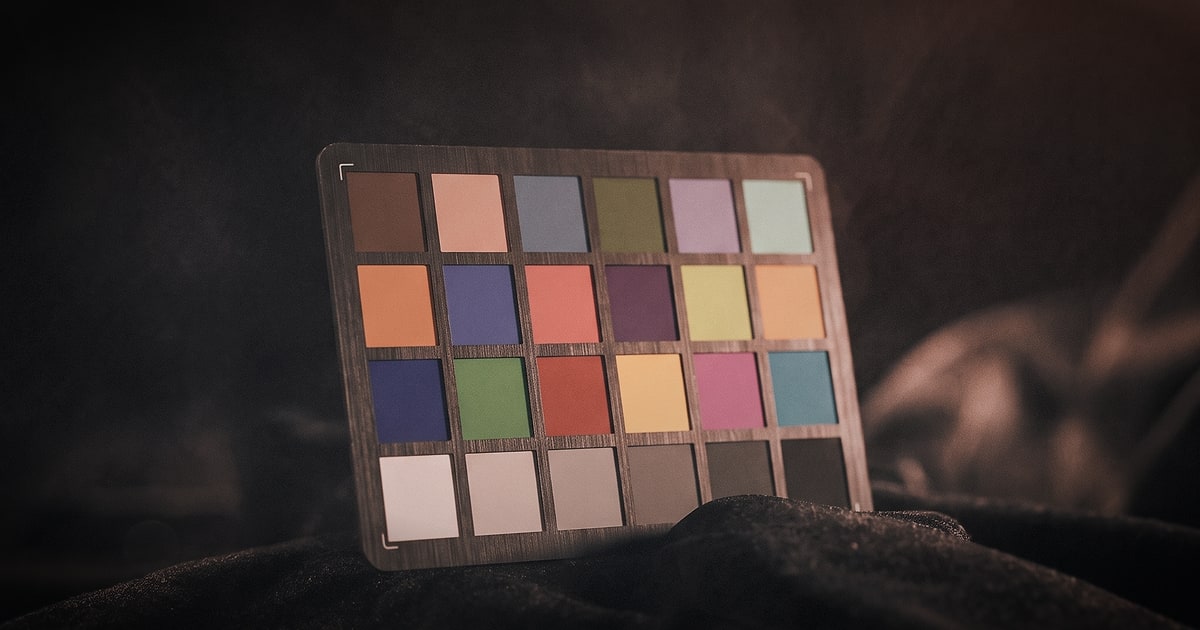
- Colour grading: Colour is mood. A warm grade feels safe and human; a cool, desaturated grade feels modern and precise. The grade is a creative decision, not a technical correction.
- Motion graphics and titles: Text on screen is not decoration — it is typography in motion, and it must serve the same visual logic as everything else.
- Sound design and music: Arguably the most emotionally powerful tool in post-production. The right track can double the impact of a scene; the wrong one can kill it.
- Sound mix and mastering: Dialogue clarity, ambient sound, music levels — the final mix shapes how polished and intentional the piece feels.
The Through-Line: Consistency of Vision
If there is one quality that defines excellent creative direction, it is consistency. Not rigidity — but a persistent, coherent logic that runs from the first sentence of the brief to the last frame of the export.
Every great campaign, every memorable brand film, every photograph that stops you mid-scroll has this quality: every element is pulling in the same direction. The lighting reinforces the colour palette. The music reinforces the pace. The pace reinforces the emotion. The emotion reinforces the message.
This is not accidental. It is the result of a creative director who understood the central idea clearly enough to make a thousand small decisions — most of them in real time, under pressure — in service of that idea.
Why It Matters for Your Brand
For brands and businesses commissioning creative work, understanding this process has a practical payoff: it makes you a better client.
When you can articulate the emotional destination clearly, when you understand why the brief matters more than the mood board, when you trust the creative process enough to let it do its work — you get better outcomes. Not just better-looking content, but content that actually does something.
Creative production is a collaboration. The best results come when clients and creative partners speak the same language — when the brief is sharp, the trust is mutual, and the shared goal is work that genuinely moves people.
That is the promise of strong creative direction: from the first conversation to the final cut, every decision in service of one clear idea.
And when it works, you feel it before you can explain it.