# Audio Recording on Set: Tech for Broadcast-Quality Sound
You can grade a dark shot, stabilise a shaky clip, even reframe a poorly composed frame in post — but you cannot fix truly bad audio. Nothing undermines a beautifully produced corporate film or brand video faster than muffled dialogue, wind rumble, or the hiss of a poorly placed microphone. Sound is half the picture, and yet it remains the most under-resourced department on many production sets.
After working across corporate films, interviews, brand documentaries, and live events from Porto to Paris, we've learned one thing consistently: productions that invest properly in audio from day one arrive at the edit suite with confidence. Those that don't spend weeks in damage control.
This guide breaks down the essential technology, workflow logic, and on-set habits that deliver broadcast-quality audio — every take, every time.
---
Why Audio Quality Is a Non-Negotiable
Before diving into hardware, it's worth understanding what "broadcast quality" actually means in a practical sense. Broadcasters and streaming platforms — from RTP to Canal+ to YouTube's managed content partners — define acceptable audio by a set of loudness standards (EBU R128 in Europe), dynamic range expectations, and noise floor thresholds.
In plain terms:
- Signal-to-noise ratio should be 60 dB or higher for clean dialogue
- Noise floor should sit below -60 dBFS in controlled environments
- Integrated loudness for most digital platforms targets -14 to -16 LUFS
---
Microphone Types: Choosing the Right Tool for the Scene
No single microphone works perfectly in every situation. Understanding when to deploy each type is foundational knowledge for any production team.
Shotgun Microphones
The workhorse of on-set audio. Shotgun mics (also called supercardioid or hypercardioid mics) have a tight polar pattern that isolates the sound source in front of the mic while rejecting noise from the sides and rear. They're boom-mounted above or below the frame, operated by a dedicated boom operator — a role that deserves far more credit than it typically receives.Top-tier choices:
- Sennheiser MKH 416 — the industry standard for location audio, exceptional off-axis rejection
- Rode NTG5 — lightweight, low self-noise, excellent for travel-heavy productions
- DPA 4017B — premium option, extraordinary natural sound reproduction
Lavalier Microphones (Lavs)
Small clip-on microphones placed on the talent's clothing, typically 15–20 cm below the chin. Lavs are indispensable for interview setups, sit-down presentations, and any scenario where boom access is restricted.Key considerations:
- Placement is everything — avoid fabric rustle by using moleskin or medical tape to secure the capsule
- Omnidirectional lavs (like the DPA 4060 or Sanken COS-11D) tend to sound more natural than directional alternatives
- Always use a wireless system with proper frequency coordination, especially in urban environments like Porto or Paris where RF congestion is real
Wireless Transmitter Systems
Pairing lavs with a reliable wireless system removes cable clutter and gives talent freedom of movement. The current gold standards:- Sennheiser EW 6000 series — professional-grade, digital transmission, exceptional RF stability
- Sony UWP-D series — popular on documentary and broadcast sets, robust and reliable
- Lectrosonics SSM + SMQV — preferred by Hollywood sound mixers, outstanding range and audio fidelity
---
Audio Recorders: Where the Signal Lives
The camera's internal audio is almost never sufficient for professional production. Even high-end cinema cameras compress audio in ways that introduce artefacts. A dedicated field recorder is essential.
Portable Stereo and Multi-Track Recorders
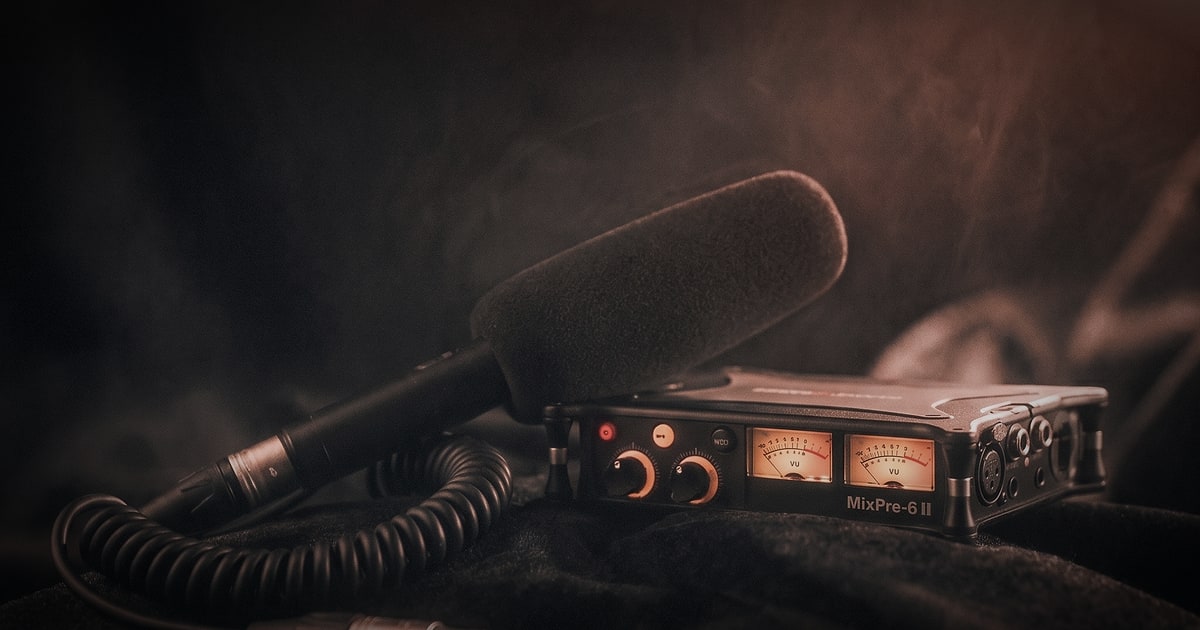
- Sound Devices MixPre series (MixPre-3, MixPre-6) — beloved by documentary and commercial sound recordists. The Kashmir preamps are genuinely exceptional, clean up to very high gain settings.
- Zoom F-series (F6, F8n Pro) — highly capable, more budget-accessible, with 32-bit float recording that effectively eliminates gain-setting errors on set
- Tascam Portacapture X8 — a strong mid-tier option for smaller productions
32-Bit Float Recording: A Game-Changer for Smaller Crews
One of the most significant recent advances in field recording is 32-bit float capture. Recorders like the Zoom F6 and the Rode Wireless PRO system record at 32-bit float, which means there is essentially no such thing as clipping or an overloaded signal. If a speaker unexpectedly raises their voice during an interview, the recorder captures the transient without distortion — and a sound designer can recover it perfectly in post.
For run-and-gun productions or events where a dedicated sound mixer isn't always monitoring levels, 32-bit float is a genuine safety net.
---
Boom Operating: The Human Element
The best microphone in the world sounds mediocre if it's operated poorly. Boom work is a craft, and on professional sets it's treated as such. A skilled boom operator:
- Keeps the mic as close to the talent as possible without entering frame — typically 30–40 cm above the head
- Anticipates dialogue and movement, pre-positioning before the talent speaks
- Maintains consistent mic angle (0° on-axis for shotguns, angled slightly toward the mouth)
- Communicates constantly with the sound mixer and camera operator
---
Sound Monitoring on Set
Monitoring is how you catch problems before they become post-production nightmares. Every professional set should have:
- Closed-back headphones for the sound recordist — Sony MDR-7506 remain the near-universal standard, trusted for their accuracy and extended high-frequency response
- A mixer or recorder with dedicated metering — peak meters and VU meters read the signal differently; knowing the difference matters
- A scratch audio feed to camera — even if the camera audio isn't your primary, having reference audio on the video file streamlines the syncing process in the edit
---
Acoustic Environment: What No Microphone Can Fix
Hardware accounts for perhaps 60% of great on-set audio. The remaining 40% is the acoustic environment you're working in. Some of the most common problems we encounter:
- HVAC and air conditioning — always ask the venue to switch off air handling units during takes. They're barely audible in the room but devastating on a microphone
- Room reverb — hard, reflective surfaces (glass, concrete, tile) create a wash of reverb that makes dialogue sound distant and unprofessional. Soft furnishings, acoustic panels, or even hanging moving blankets can treat a space quickly
- Traffic and urban noise — in cities like Porto and Paris, external traffic is a constant challenge. Scheduling sensitive audio takes during quieter periods (early morning, lunchtime) or using directional microphones to reject off-axis noise helps significantly
- Electrical interference — always use balanced XLR cables, keep audio cables away from power cables, and use DI boxes when connecting to external PA systems
Post-Production: Polishing What You Captured
Even with perfect technique, post-production audio work elevates raw recordings to broadcast standard. The essential tools:
- iZotope RX — the industry benchmark for audio repair, capable of removing noise, hum, clicks, reverb, and even some wind artefacts. RX 10 Advanced is used on feature films and broadcast television worldwide
- Dialogue editing — careful editing of breath noise, mouth clicks, and unwanted room tone is as important as any technical processing
- Loudness normalisation — rendering to EBU R128 (-23 LUFS for broadcast, -14 LUFS for streaming) ensures your audio meets platform delivery requirements
- Sound design and music — a well-chosen score or sound design layer transforms a technically correct audio track into an emotional experience
---
Building Your On-Set Audio Kit
If you're assembling a kit for the first time, here's a practical starting framework:
Entry-level professional kit:
- Rode NTG5 shotgun + K-Tek boom pole
- Rode Wireless GO II (compact wireless lav system)
- Zoom F6 recorder (32-bit float)
- Sony MDR-7506 headphones
- Sennheiser MKH 416 shotgun
- DPA 4060 lavs + Sennheiser EW 6000 wireless
- Sound Devices MixPre-6 II
- Sony MDR-7506 or Beyerdynamic DT 770 Pro headphones
- DPA 4017B or Schoeps CMit 5U shotgun
- Sanken COS-11D lavs + Lectrosonics wireless
- Sound Devices 888 or Scorpio mixer/recorder
- Dedicated boom operator + sound mixer
Conclusion: Sound Is a Craft, Not an Afterthought
The gap between amateur and professional video production is often heard before it's seen. Audiences forgive imperfect visuals — shaky handheld, slightly soft focus, inconsistent framing — far more readily than they forgive bad audio. Poor sound signals amateurism instantly, and it erodes trust in the content, the brand, and the message.
Investing in the right microphones, recorders, and monitoring workflow isn't a luxury for productions with large budgets. It's the baseline for anyone serious about the work. Whether you're producing a CEO interview for a Paris-based financial firm or a brand documentary shot across the Douro Valley, broadcast-quality audio should be the standard — not the aspiration.
The technology exists. The techniques are learnable. The only question is whether your production treats sound with the same rigour it applies to cinematography.
At TNG, it always does.